South Australians are often surprised to discover the range of local people who have contributed to many areas of society at a local, national and international level. These images are from an exhibition of hand coloured lino prints containing a personal and idiosyncratic selection of some of these people. All images are 24 x 29 cm, printed on paper approx 32 x 39 cm. Please contact me to ask about availability if you’re interested in purchasing any of the prints. Some of the images have also been used for tea towels and tote bags – check my online store. The first batch have been collected into a beautiful book published by Wakefield Press.
I am always adding to this series, so if you have any suggestions of who you consider to be a Local Icon, please let me know!
So, in no particular order, here we go …
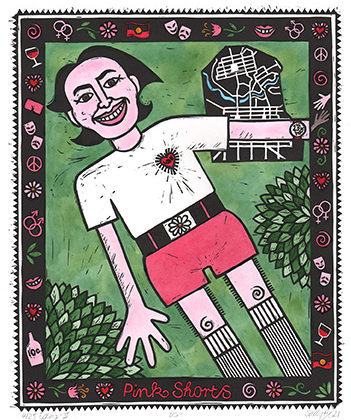
Don
Don Dunstan’s socially progressive leadership of SA during the 60s and 70s oversaw (amongst other things) the recognition of Aboriginal land rights, the decriminalisation of homosexuality, the abolishment of the death penalty, the relaxation of censorship and drinking laws. On top of all that, he was a great supporter of the arts.
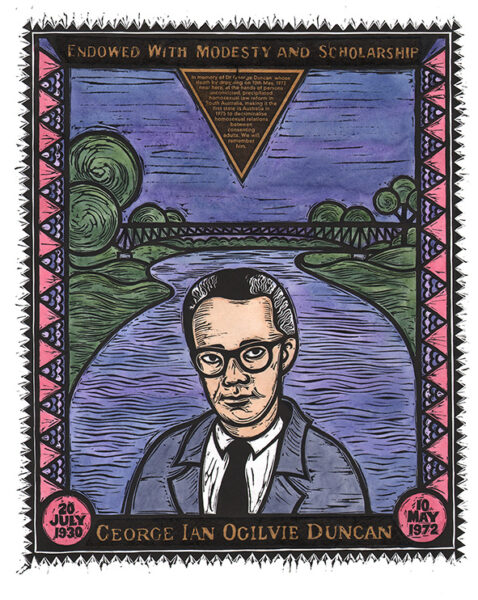
Doctor Duncan The tragic murder by drowning of Doctor George Duncan, on May 10 1972, in the River Torrens near the University Footbridge, mobilised public sentiment and political will towards homosexual law reform. In 1975 South Australia became the first state in the country to decriminalise homosexual relations between consenting adults. His murderers were never convicted.
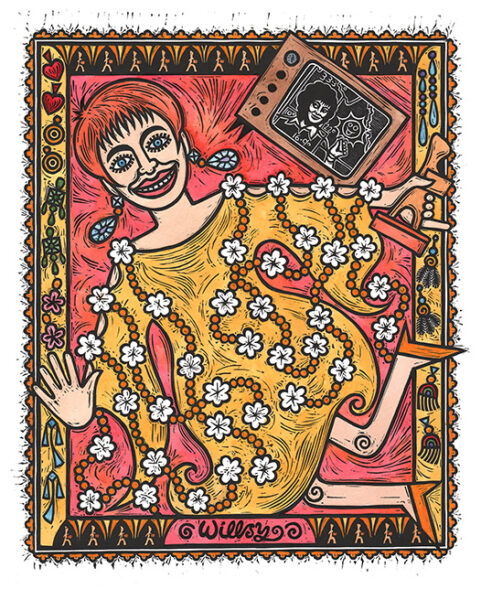
Anne In the early days of television, many shows were live, and local personalities were considered members of the family. Like Anne Wills. Willsy. You know you’re a success in showbiz when you’re known by a single name. She started out as South Australia’s first weather girl famously, and daringly, wearing a bikini on air, albeit quite modest by today’s standards, when the temperature topped 100 degrees Farenheit. She went on to appear in a succession of shows, winning along the way the love of the public and a record nineteen Logies.
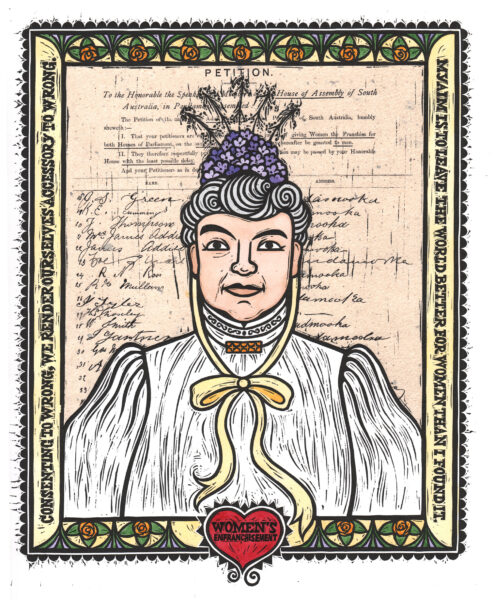
Mary L Mary Lee was a 58 year-old widow when she travelled from Ireland to Adelaide with her daughter to nurse her sick son. Sadly, Ben died shortly after they arrived. Mary and Evelyn took a liking to Adelaide, or maybe simply couldn’t afford to return, but for whatever reason, they stayed. Mary threw herself into campaigning for women’s rights and what a force she was! Never afraid to say what she thought, and bluntly, she wasn’t always popular. Amongst other things she was instrumental in forming a union to protect women workers, in raising the age of consent and in the successful campaign which ultimately resulted in SA being the first colony in Australia, and only the fourth place in the world to allow women to vote. Campaigners collected around 11,600 signatures on a petition that was 122 metres long. It was rolled and tied with a yellow ribbon.
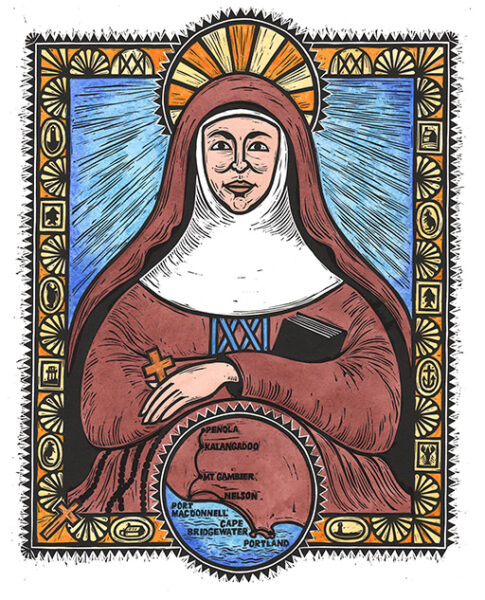
Mary M Mary MacKillop, Australia’s first, and so far only, Saint (at least the officially recognised Catholic type saint) was born in Melbourne, but she is known best for her activities in SA. It was at Penola that she established the first of her schools and founded her religious order, the Sisters of Saint Joseph. They came to be known as ‘brown Joeys’ because of their brown habits. Anyone who is a walker has most likely heard of the Camino de Santiago, or the Way of Saint James. The ‘Aussie Camino’ traverses 250km from Portland (in Victoria) to Penola, inspired by Mary M’s life and travelling through places she lived and worked.
Jack
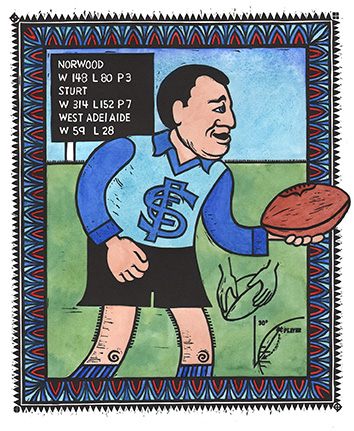
As a coach, Jack Oatey excelled. He holds the record for coaching more elite level victories than any other, a total of 521, and the most Premierships as coach 10 (equal top) including five in a row. He is also credited with revolutionising the game by instigating the greater use of handball as an attacking option and popularising the check side punt, which has itself been listed as a South Australian icon. He was inducted into the Australian Football Hall of Fame in 1996 and was elevated to legend status in 2021, only the second Legend to have played and coached his entire career in South Australia.
Gladys
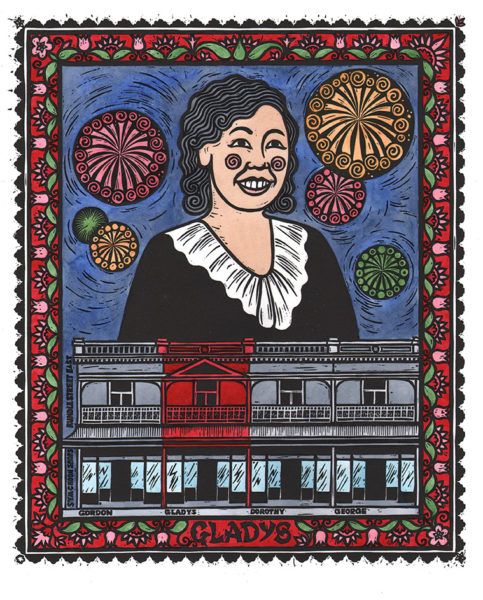
Gladys Sym Choon was the first woman in SA to run a business in her own right at only 16. She travelled regularly to China to buy her stock, which included embroidered silks and lingerie, carved ebony and eggshell china, cloisonné and exquisitely hand-worked table linen. Her father bought four shops in Rundle Street East, one for each of his children. Dorothy leased hers, but George and Gordon ran similar businesses selling all sorts of things including matches and chewing gum, homemade pickles, nuts and ice cream. In the lead up to Guy Fawkes the people of Adelaide would queue to buy fireworks.
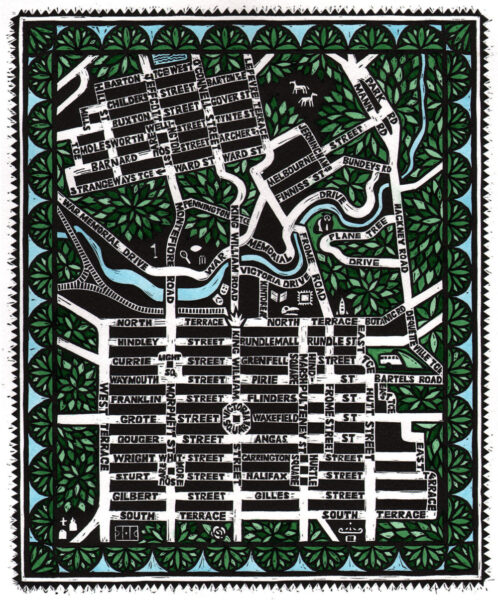
City StreetsThe street names for the City of Adelaide were gazetted on 3 June 1837. A Street Naming Committee was made up of the Governor and eleven prominent citizens.King William Street, running north-south and bisecting the city, is named after King William IV. Between North Terrace and South Terrace, all east-west roads change their names as they cross King William Street, a source of much confusion amongst even long-term residents. Some say that this is because no-one is allowed to cross the path of a monarch. This may be true, but it also enabled more names to be assigned. Some of the north-south streets as well as some streets in North Adelaide also have separately named sections.
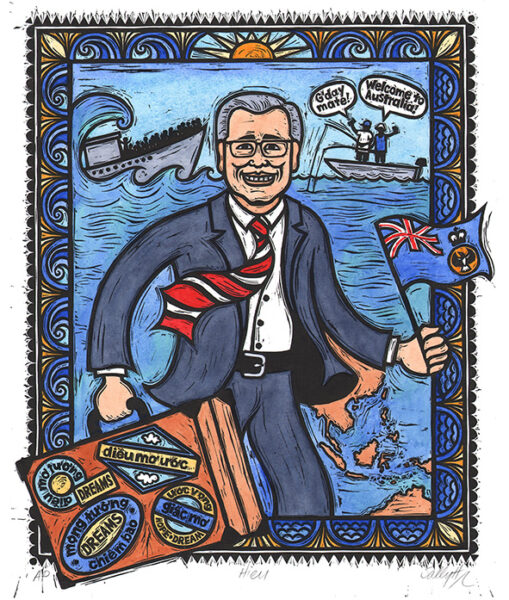
Hieu During the last decade or so, when Australia’s immigration policy has been anything but generous and welcoming to refugees, I’ve often thought about Hieu Van Le. He arrived here as one of the early Vietnamese ‘boat people’ in 1977. He has said, ‘as a refugee I arrived on this shore with nothing but an invisible suitcase full of dreams.’ In 2014 he became South Australia’s 35th governor, the first person of Vietnamese background to be appointed to a vice-regal position anywhere in the world. When my picture book One Step at a Time (written by Jane Jolly) was released, we were privileged to have him launch it. In his speech he spoke eloquently about the importance of books and literacy. He explained that although the book is not specific about where it is set, he knew instantly that it was the village he grew up in. I was charmed. I heard him speak on a number of other occasions during his Governorship, at varied functions including my daughter’s high school graduation and he was always just as engaging and generous. Reading about his dangerous journey to Australia, no one could believe that anyone would undertake such a journey on a whim, or for anything less than desperation. When their flimsy wooden boat neared Darwin, they saw a small tinny speeding towards them. In it were two men wearing wide brimmed hats, zinc cream on their noses, clutching beers and fishing rods. They raised the beers, calling out, ‘G’day mate! Welcome to Australia!’
Andy
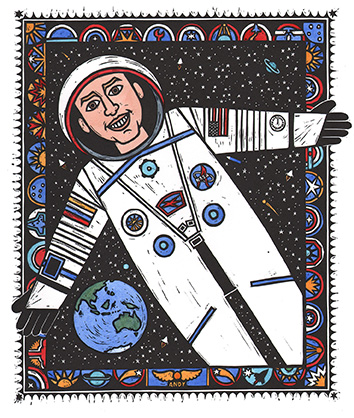
Andy Thomas, born and bred in Adelaide, was the first, and so far only, Australian-born astronaut to go into space. (Okay, so there was another Aussie, Paul Scully-Power, who went to space earlier, but as a civilian oceanographer, not an astronaut.) In all he had four space flights, represented by four rockets in the print, including a space walk – how cool is that? When asked about his experiences in space, he said that on his first trip he kept losing pens and pencils. They floated off and hid behind things …
The images in the border are based on Andy’s mission badges.
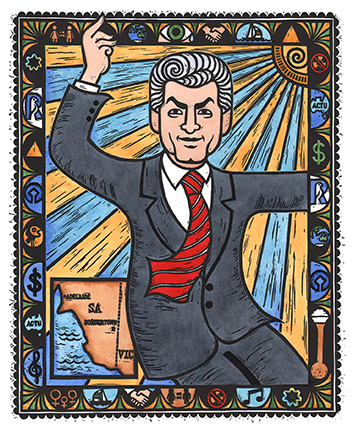
Bob Arguably our most popular PM of all time? Born in Bordertown. 75% approval rating? Incredible. I wonder how much of that is due to his Guinness world record for drinking a yard of beer in eleven seconds (it’s since been more than halved – please don’t try this at home) although he didn’t touch a drop whilst in power. Doesn’t really matter. He was a good leader as well as a good bloke. He lost me for a while over the Hazel/Blanche thing, but I came round again. He’s only the second politician I’ve shed a tear over when they died – and I’m not a cryer. (Who else? Gough. Of course.) Bob was known to shed a tear on occasion as well. The icons in the border reference the ways the Hawke government changed Australia – floating the Australian Dollar, opening the Australian economy to global competition, launching Medicare, striking the Prices and Incomes Accord with unions, giving the Commonwealth power over World Heritage sites, saving the Franklin, banning uranium mining at Jabiluka, outlawing gender discrimination in the workplace, proclaiming Advance Australia Fair as the national anthem and green and gold as the national colours – as well as his leadership of the ACTU, his Rhodes scholarship and the America’s Cup victory which prompted one of his most well-known quotes, ‘Any boss who sacks anyone for not turning up today is a bum.’
The icons in the border reference the ways the Hawke government changed Australia – floating the Australian Dollar, opening the Australian economy to global competition, launching Medicare, striking the Prices and Incomes Accord with unions, giving the Commonwealth power over World Heritage sites, saving the Franklin, banning uranium mining at Jabiluka, outlawing gender discrimination in the workplace, proclaiming Advance Australia Fair as the national anthem and green and gold as the national colours – as well as his leadership of the ACTU, his Rhodes scholarship and the America’s Cup victory which prompted one of his most well-known quotes, ‘Any boss who sacks anyone for not turning up today is a bum.’
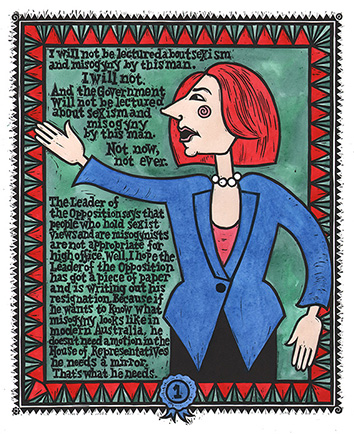
Julia
Yes, I know she was born in Wales, but she’s ours, isn’t she? Our first female Prime Minister and our first red-haired PM. This image, featuring an extract from her legendary misogyny speech, has been hands down my most popular print ever.
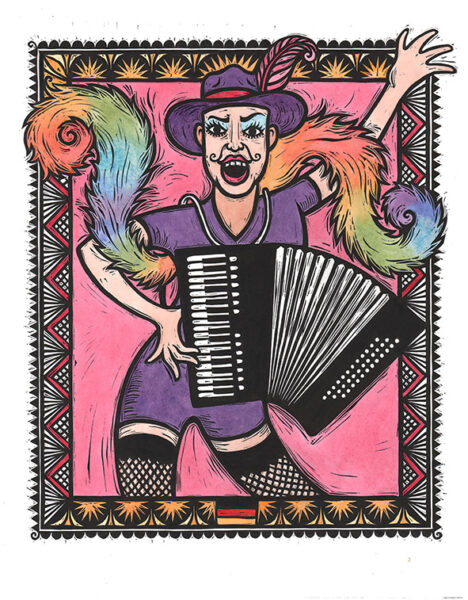
Hans International superstar, sex symbol, accordionist and Berlin boy-wonder. Since I began working on my Local Icons series a few years ago, I have been inundated with suggestions for who I should add to the collection. One name that has kept recurring is ‘Hans’. Also, when I’ve asked who would be the best icon to represent the South Australian LGBTQIA+ community the answer has been, resoundingly, ‘Hans!’ So here he is! As well as being known and loved by many (many!) South Australians, he has thrilled audiences and won hearts all around the country and the globe, including on America’s Got Talent, where he was proclaimed one of the ten best entertainers in the world. Cheeky, irreverent, hugely talented and totally fabulous.
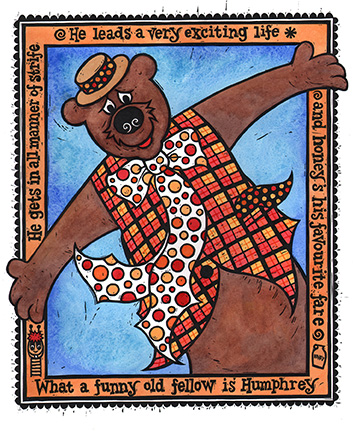
Humphrey
Before I started school, one of my daily afternoon rituals was watching the Channel Niners. The main attraction of the show was, of course, Humphrey B. Bear. Everyone of a certain age has a Humphrey story and now he has joined the South Aussie with Cosi team, to delight a new generation of fans.
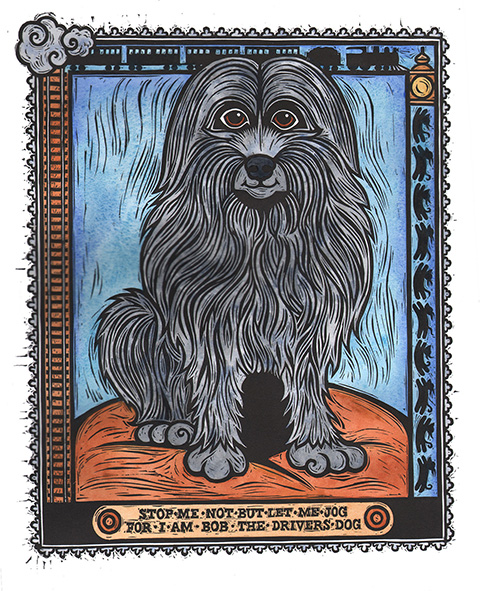
Bob the Railway Dog I love my dog, but she does make it harder at times to indulge one of my other loves, travelling. I know that she’d rather I always stayed at home with her. Bob was a different story. While home was Peterborough in South Australia’s mid-north – Petersburg at the time – Bob was rarely there. Once the travel bug had bitten him, he spent most of his life on the road or, more accurately, on the railway. For over a decade, he travelled thousands of miles, from Oodnadatta to Melbourne to Broken Hill and into Queensland. He was known and loved (and fed) by railway workers and people along his regular routes who would watch out for him, and his exploits were celebrated around the world. When he ‘retired’ to Adelaide he frequented a pub and butcher’s shop in Hindley Street. His death on 29 July 1865 at the age of 17 was reported in the local paper, The Advertiser.
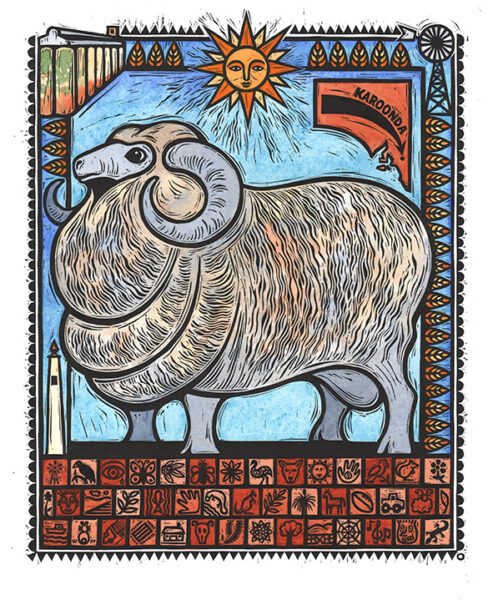
The Big Ram Many towns around Australia host ‘big things’ ranging from galahs to crayfish, koalas and potatoes. Karoonda, in the heart of South Australia’s Mallee, has its very own local icon, the Big Ram. It was created in 1996 as a community art project. As well as being a thriving agricultural centre, primarily growing wheat and raising Merino sheep, Karoonda also has a rich and lively arts scene, including public sculptures and nightly projections of art onto the town’s silos. The obelisk in the bottom left, commemorates the meteorite which fell to earth there as a flaming fire-ball in 1930.
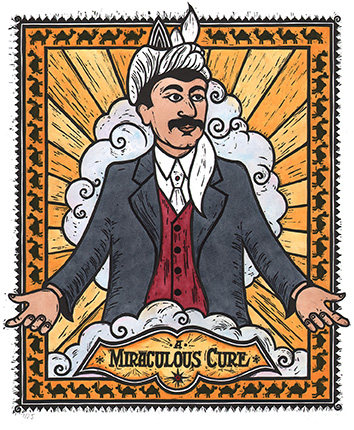
Mahomet Allum
Known as a herbalist and healer, some called him a charlatan and the medical establishment despised him, yet he was loved enough by his clients and the public generally, that when he announced he was returning to Afghanistan in 1953, a petition gathered 19,000 (no that’s not a typo) signatures begging him to return as soon as possible. From his business in Sturt Street, he saw hundreds of patients a day on a donations-only basis, and donated most of his income to the needy. When he died in 1964 at 106 (or possibly 108)is funeral procession from the Adelaide Mosque stretched for over 1.6 km. He left nearly all his estate to charities that cared for children and bought fourteen plots at Centennial Park for other Muslims who couldn’t afford a proper burial.
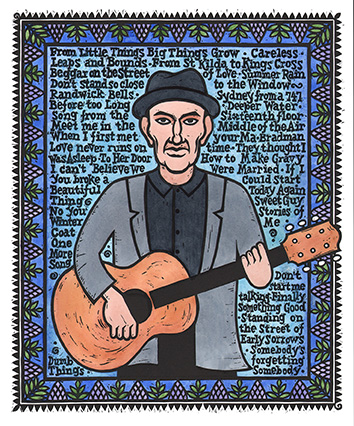
Paul
Could he be Australia’s Poet Laureate? Paul has provided the soundtrack to much of my life. I’ve seen him play more times than I can count. The song titles in the print were chosen by asking friends their fave PK songs. There was a lot of common ground but a few outliers. Overall winner? Tough call … Gravy perhaps although possibly Dumb Things by a whisker.
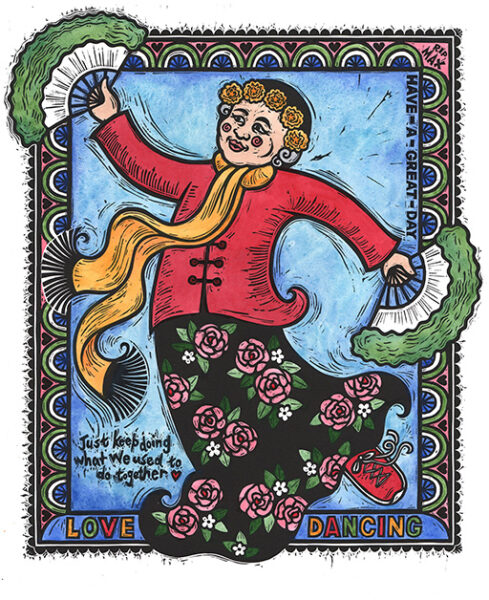
Bobo Po Chun Fung, known as Bobo, is often to be found dancing in Rundle Mall. She hasn’t always danced alone. Bobo used to dance with husband, Max Gordge. Originally from Hong Kong, Bobo was visiting her daughter in Adelaide when she met Max. They clicked. While he was visiting her in Hong Kong he was inspired by the street dancers he saw there. On his return he started dancing in the Mall. He became an icon, not just for his exuberant dancing style but for his flamboyant attire. When Bobo married Max, she was at first reluctant to join in, but seeing how much people loved Max and how much joy his dancing brought them she was convinced. And people loved her just as much. In December 2018, not long before his 83rd birthday, Max passed away peacefully at home. Bobo didn’t intend to continue, but so many people came to the mall and paid tribute to Max, that she decided to keep going. Now she intends to dance for as long as her body will allow her.
Local Icons
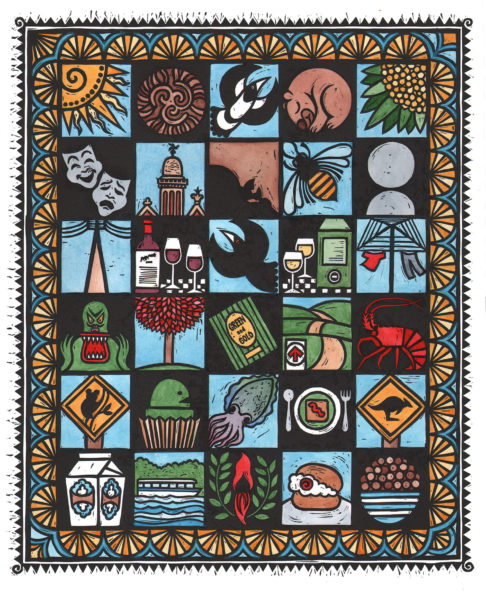
A collection of some of the non-human South Australian Icons. Left to right, top to bottom – Sunshine, Ediacaran fossil, Piping Shrike, Hairy-nosed Wombat, Golden Wattle, the Arts, Beehive Corner, SA, Ligurian Bee, ‘Mall’s Balls’, Stobie Pole, Penfolds Grange, Crow, Wine Cask, Hills Hoist, Bert the Bunyip, Claret Ash, Green and Gold Cookbook, the Heysen Trail, the Big Lobster, Koalas, Frog Cakes, Giant Cuttlefish, Pie Floater, Kangaroos, Farmers Union Iced Coffee, Popeye, Sturts Desert Pea, Kitchener Bun and FruChocs.
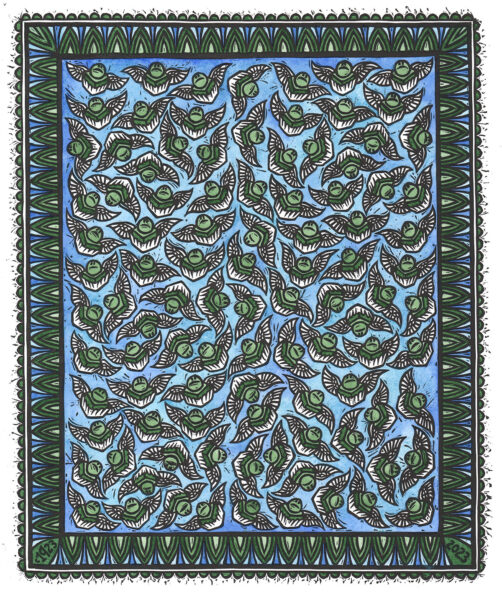
100 Years of Frog Cakes Anyone who grew up in Adelaide will have eaten at least one frog cake in their lives. For the uninitiated, a frog cake consists of a sponge cake base, with a jam centre, topped with artificial cream, covered with a layer of fondant icing. The open mouth is formed with a hot knife and eyes added in contrasting fondant. They were introduced into the Balfours’ range in the 1920s, possibly after one of the family members returned from Paris, inspired by fondant covered petit fours he saw there. Tea rooms were popular at that time, and it was one of the ‘assorted fancies’ introduced, but soon became a mascot for the company. Originally exclusively green, later chocolate and pink versions were added to the range. The recipe remains identical to this day. A century later, there’s no denying they are an SA icon.
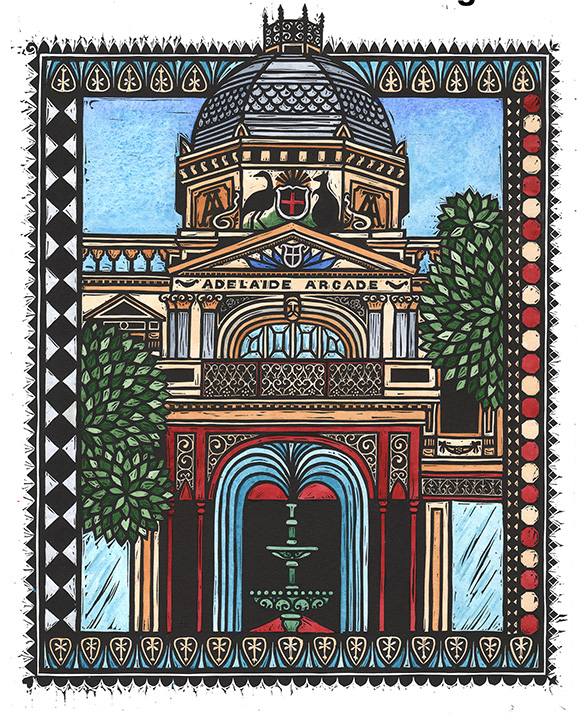
Adelaide Arcade has been a Local Icon since it opened in December 1885, when it was the grandest building the city had seen. Featuring Carrera marble floors, glass-panelled ceilings and fifty shops, it took two hundred workers five months to complete, along with the adjoining Gays Arcade. It was innovative as well, being one of the very first buildings in Adelaide to have electric lights. The official opening was celebrated with an orchestra playing ‘The Adelaide Arcade Polka’ for the Governor and gathered crowds. Over the years it has hosted a wide variety of businesses including Turkish Baths and an underground Tea Room. There was an orchestral gallery and grand balls were once held in Gays Arcade. It even has a ghost, the resident caretaker who in 1887 met a gruesome and untimely end and still – it is rumoured – wanders the arcade at night.
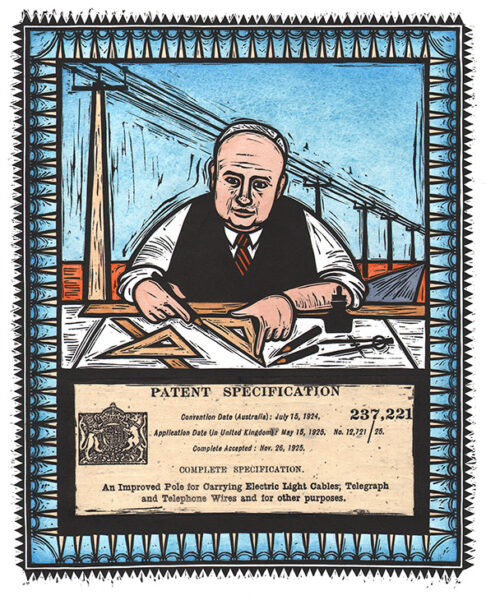
Cyril James Cyril Stobie was working for the Adelaide Electric Supply Company (precursor to SA Power Networks) he became aware of South Australia’s problem with sourcing power poles. A lack suitable timber locally meant poles had to be brought from interstate at considerable expense, and these were being destroyed by termites. His brainwave was to use two steel beams filled in with concrete, impervious not only to termites but to wayward cars. I made this print in 2024 to mark the 100th birthday of what has become a South Australian Icon.
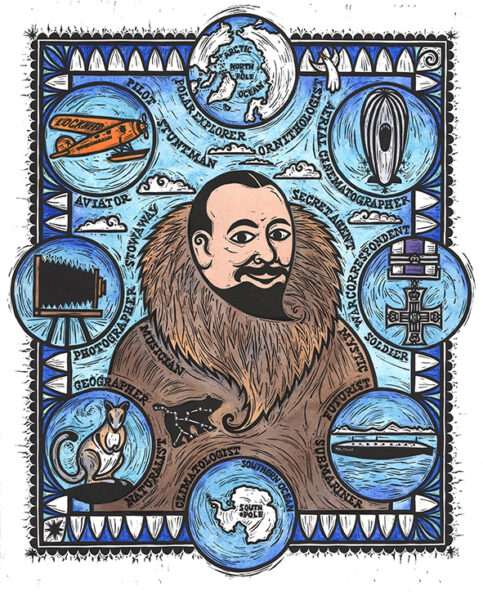
George George Hubert Wilkins. After he was knighted he dropped the George and became Sir Hubert Wilkins. His actress wife thought it sounder posher and I guess she was right. Born in 1888 into a sheep herding family at Mount Bryan in South Australia’s mid-North, he was the last of thirteen children.His life reads like a boys’ own adventure story. Polar explorer, pilot, war hero, photographer, naturalist … and that’s only part of it. He flew across the Arctic and Antarctic, took part in thirty or so polar expeditions, was the first to take a submarine under the Arctic ice, and travelled for two years across northern Australia collecting flora and fauna specimens, including a species of rock wallaby which is named for him. Not to mention the time he stowed away on a ship at Port Adelaide and ended up with gunrunners in Algiers. Or the time he spent as a spy, or his narrow escape from Russian cannibals. I could go on … if this was a movie it would seem WAY too far fetched!
Iparrityi
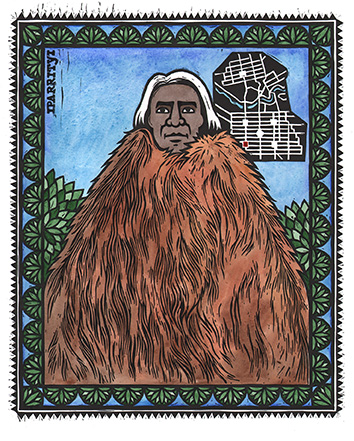
Iparrityi, in the southwest corner of the city square mile is also known as Whitmore Square. It is named to honour the ‘last woman of the Adelaide tribe’, who is also often acknowledged as the last full Kaurna speaker. Iparrityi, whose name translates as ‘gentle, misty rain’, was born in the 1840s at Port Adelaide and died in 1929. She was known for her keen intelligence and sense of humour. The knowledge she passed on about the Kaurna people, language, customs and important sites throughout Adelaide has been invaluable to understanding and preserving them for future generations.
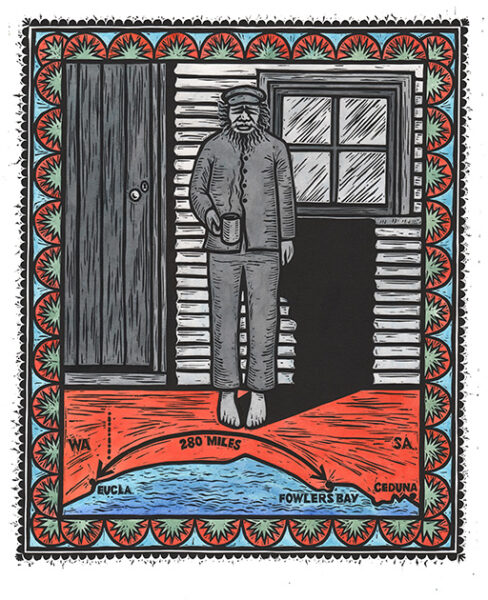
Koolbiri also known as Mailman Jimmy, delivered the post between Fowlers Bay and Eucla, just over the WA border. Every month he completed the 700 plus km round trip on foot. He was reputedly faster than any man on horseback. There were those who believed he must be a magic man to achieve this in the time he did. Koolbiri was recognised as the Royal Mail from around 1871-72 until 1875-76, before the telegraph station was built in 1877. He took almost nothing with him apart from the mailbags, using his superior bushcraft and knowledge to find water and food along the way. While there were other postmen who delivered mail on foot, none of them travelled nearly as far as Koolbiri. He was paid in tobacco, not much of a payment for such a task.
Roma
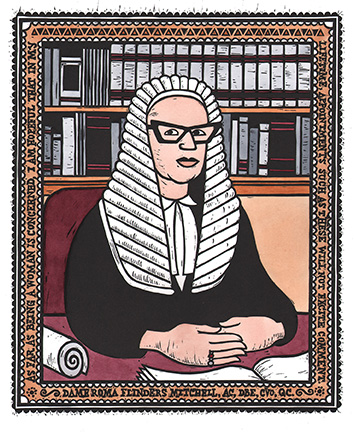
Dame Roma Mitchell, born in Adelaide in 1913, was a woman of many firsts. First female judge in Australia (at the recommendation of Don Dunstan), first woman to be a Queen’s Counsel, first female Chancellor of an Australian University, and first female Governor of an Australian State (31st Governor of South Australia from 6 February 1991 to 21 July 1996).
At her funeral, the then Governor General Sir William Deane said that she had ‘… blazed a trail for all Australian women, in law, in government, in academic life, in public and philanthropic service.’
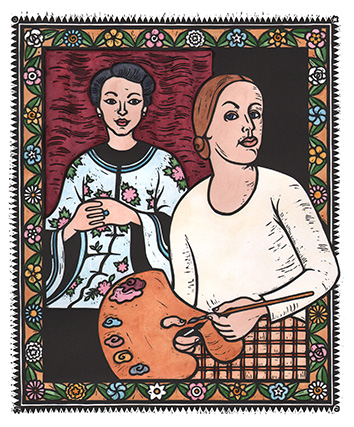
Nora
Often overlooked because of her famous father, Hans Heysen, Nora was born in 1911, the fourth of eight children, and grew up at the Cedars, near Hahndorf. She and her father had a verbal agreement not to trespass, too much, into each other’s territories. She would leave the landscapes to him, and stick to portraiture and still life. She was the first woman to win the Archibald Prize for portraiture and the first Australian woman to be appointed as an official war artist. This print references both her 1938 Archibald-winning portrait of Adine Michele Elink Schuurman, and one of her many self-portraits, this one from 1932 when she was 21.
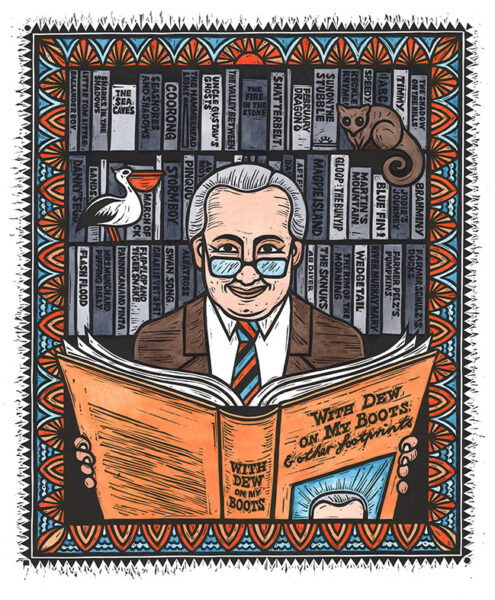
Colin When I was six, I was in the city with Mum one day, when she took me into an imposing building, filled with rows and rows of books. A small card with my name on it allowed me to choose an armful of these books and take them home. I was equally amazed and excited, but bewildered. Where to start? It was the first of weekly visits that continued for years. I would find an author I liked and work my way through every book on the shelf with their name on. Colin Thiele was one of them. I felt connected to Colin because of his German background. Like my Dad, he only spoke German at home until he went to school. His books made me feel closer to, and proud of my own heritage. Born in Eudunda he was an influential educator, as well as writing over 100 award-winning books, including Storm Boy, Sun on the Stubble, Blue Fin and February Dragon.
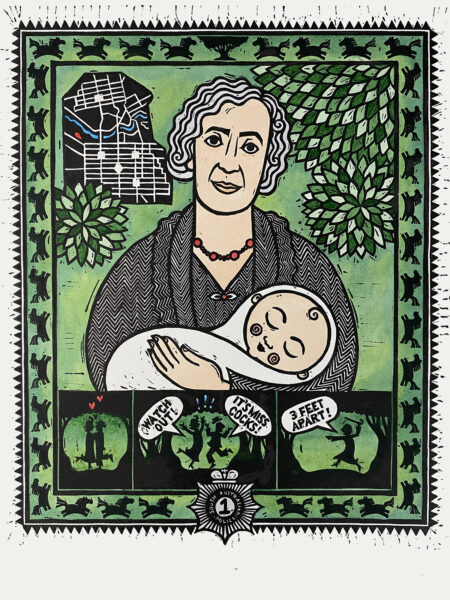
Kate Fanny Kate Boadicea Cocks was born in Moonta on 5 May 1875. In 1915 she was handpicked to become South Australia’s first woman police constable. Although there were already some policewomen elsewhere, she was the first in the British Empire to be awarded the same salary and the same powers of arrest as male officers. Always prim with tailored outfits and immaculate hair, she became well known for her nightly patrols in the parklands, armed with her five-foot cane and the catchphrase ‘Three feet apart!’ to separate amorous couples. Although primarily tasked with protecting the morality and rights of young women in a rapidly changing world, she was also involved in drug busts, missing person cases and solving many other major crimes.
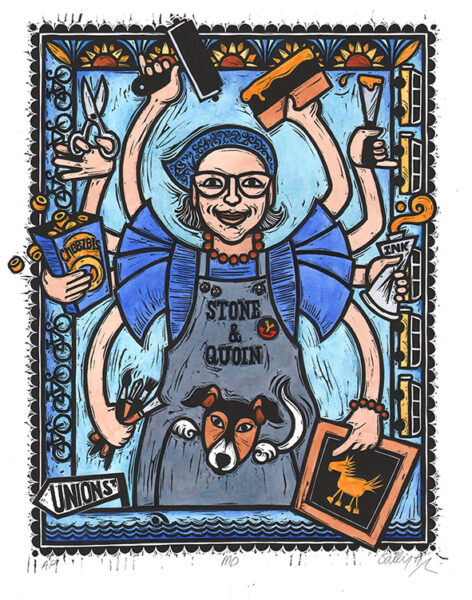
Mo When I was invited to take part in an exhibition called ‘The Printmakers Mark’, I instantly thought of Simone Tippett. As the creator of Union Street Printmakers and half of Stone & Quoin at 6 Manton, she has left a mark on almost every printmaker in South Australia. And beyond. Tremendously generous with her time, advice, encouragement and expertise as well as being unfailingly cheerful. Her energy and commitment to printmaking and to building a connected and supportive printmaking community is unmatched. I’ve depicted her as a kind of printmaking deity. Seriously, how does she do it? Her energy levels surpass that of your average human. Mine anyway. Is it the Cheezels? (Kind of like Popeye and spinach?) And Batman may have the Batmobile, but Mo has Barney. Say no more.
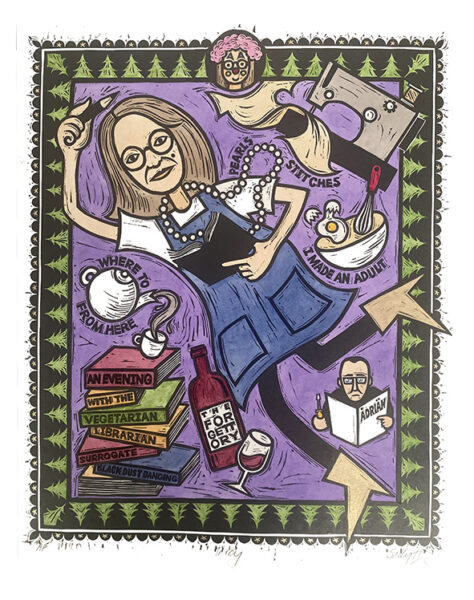
Tracy Tracy Crisp, writer and performer, is really who you have to blame for all of this. By this, I mean the images on this page. It was an invitation from Tracy to take part in an exhibition called ‘Weird Adelaide’, asking a number of Adelaide printmakers to respond to an article written by Barbara Hanrahan (another Local Icon) that prompted me to make the very first print in this series, ‘Don’. Since then it’s kind of taken over my life. In a good way. If you haven’t seen or read any of Tracy’s work, do make the effort to check her out. You won’t regret it. I’m a big fan.
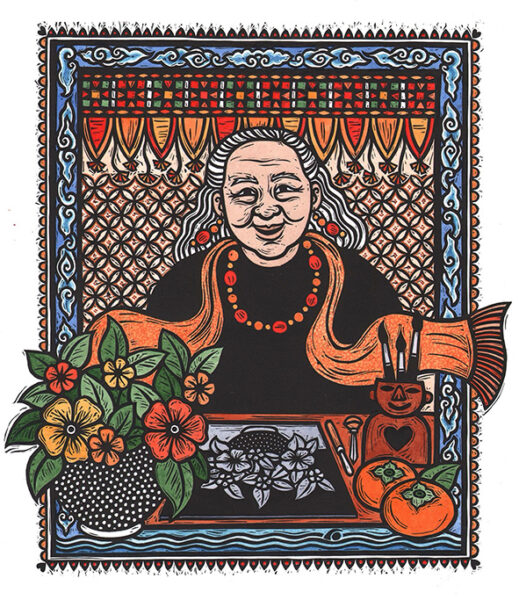
Colleen Colleen Morrow is a well-known Adelaide printmaker and collector and trader of Asian fabrics, jewellery and other goodies. She lives the sort of life that makes me tired just thinking about how she manages to fit it all in.I made this print for her 80th birthday in 2025, when she said that she’s ‘just warming up, the best is yet to come.’ I believe her!